
KidsToo a eu l’occasion d’intervenir dans le cours de droit pénal de l’Université de Lausanne pour une présentation intitulée « Vers une pénalisation du contrôle coercitif : Enjeux juridiques et humains dans les violences intrafamiliales ».
Un immense merci à la Professeure Perrier-Depeursinge pour cette opportunité précieuse d’échanger avec les étudiant·e·s en droit.
Sensibiliser et former les futurs acteurs judiciaires est essentiel pour mieux identifier, comprendre et lutter contre les mécanismes des violences intrafamiliales. Une justice informée est une justice plus protectrice.
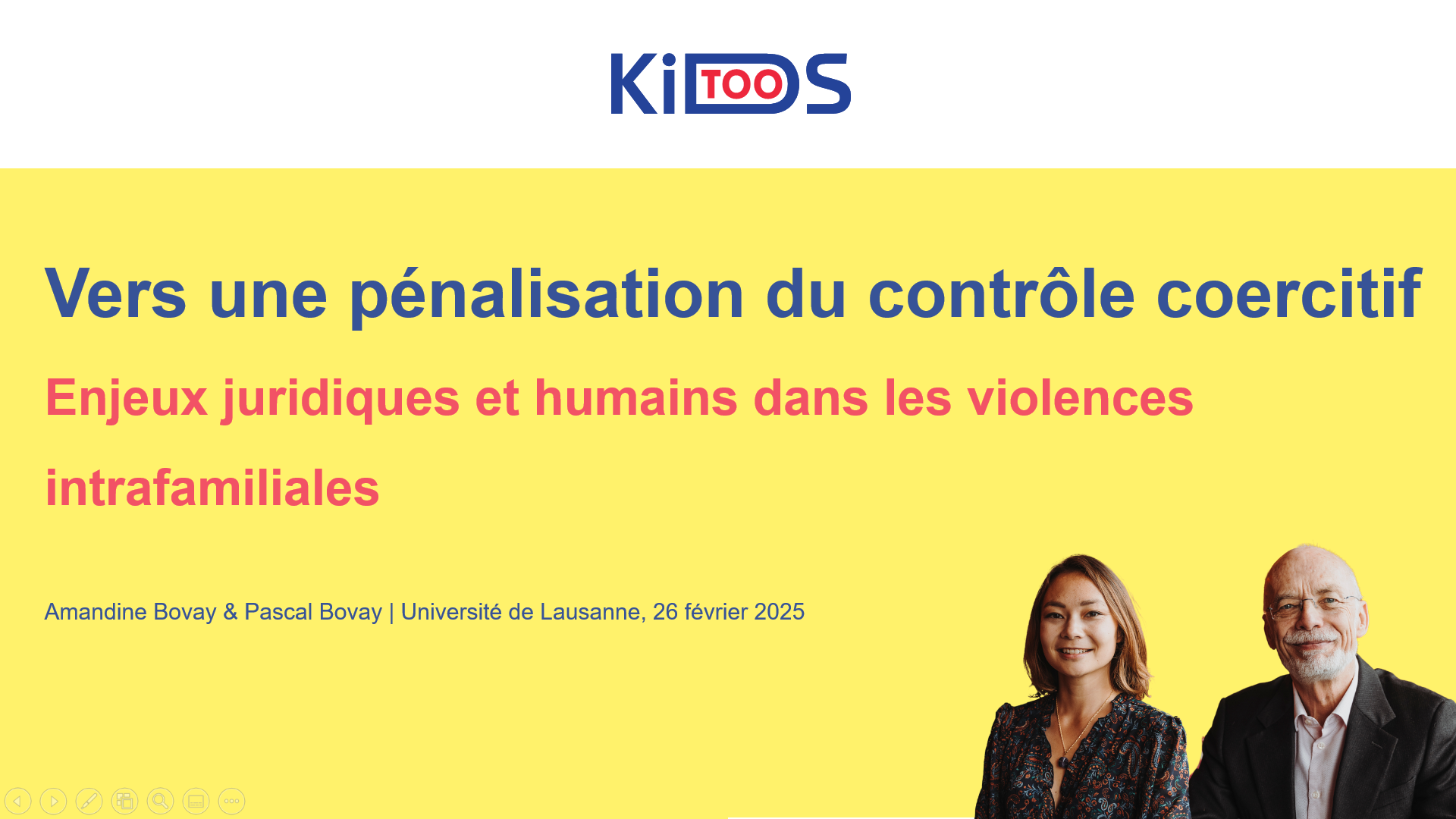
Aujourd’hui, à 2 jours de la journée internationale des droits des femmes, Jacqueline de Quattro a déposé une motion demandant au Conseil fédéral d’élaborer une modification de la loi afin d’introduire la notion de contrôle coercitif dans le code pénal et le code civil.
Le contrôle coercitif inclut des comportements répétés et insidieux tels que l’imposition de règles strictes, le contrôle des ressources financières ou encore l’isolement social et psychologique. Ces comportements constituent un schéma de domination aux conséquences graves pour les victimes.
Lire la motion ➡️ https://www.parlament.ch/fr/ratsbetrieb/suche-curia-vista/geschaeft?AffairId=20253062
L’introduction du contrôle coercitif dans la loi permettra de protéger davantage les victimes de violences domestiques qui sont principalement des femmes et des enfants.
Kidstoo collabore étroitement avec différents partenaires, dont les politiques, pour faire avancer les droits des victimes et principalement des enfants.

📢 A major step forward in France against domestic violence
🔹 Coercive control enshrined in the Criminal Code
🔹 A reform of the Civil Code to better protect victims and children
The National Assembly has passed a landmark law that finally recognises coercive control as a crime in France. This step forward means that :
✔️ Severe criminal penalties, with up to 10 years’ imprisonment and a €1 million fine. (aggravating factors: violence committed in the presence of a child, incapacity for work, disability and vulnerability)
✔️ Amendments to the Civil Code to provide better protection for victims and children: inclusion of coercive control in family court rulings, restriction or withdrawal of visiting rights and parental authority in the event of conviction.
This is only the first step: what challenges remain? 👇
An essential podcast on coercive control in domestic violence
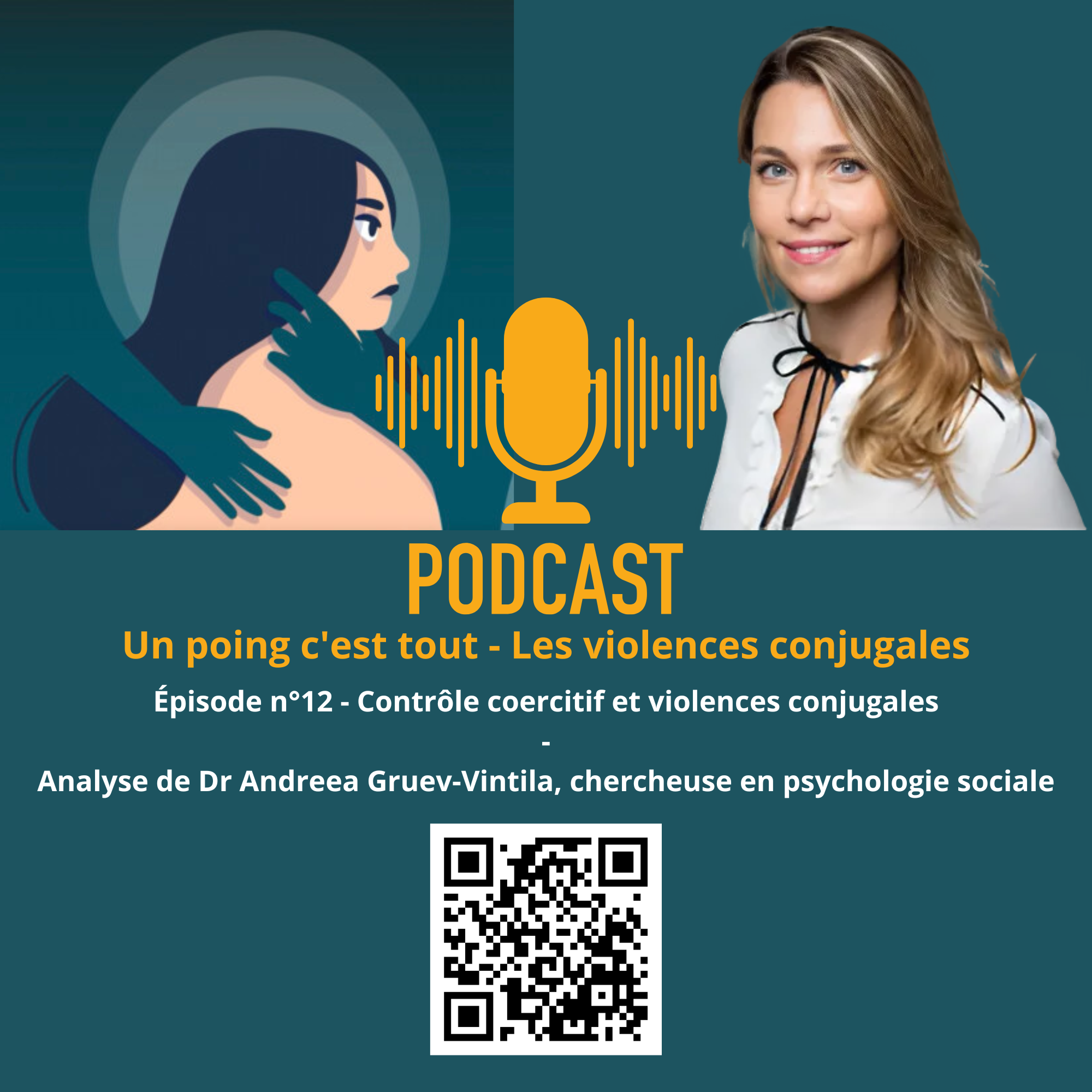
Dr Andreea Gruev-Vintilă is a researcher in social psychology and HDR lecturer at the University of Paris Nanterre. She is internationally recognised for her work on domestic violence, gender stereotypes and social norms. In 2023, she published a key work entitled “Coercive control: at the heart of domestic violence”, which is helping to shape legislation and raise awareness around the world.
In this episode of the podcast “Un poing c’est tout”, Dr Gruev-Vintilă talks to Adrien Roland Boulogne. She explores in depth the concept of coercive control in the context of domestic violence, detailing the psychological mechanisms and social norms that make it a particularly insidious form of violence. In particular, she discusses the history of the development of this concept in the marital context, the legislative challenges and the far-reaching implications for victims.
A must listen HERE
Child abuse is revolting
As 2024 draws to a close, KidsToo takes stock of a year rich in projects and commitments.
These projects include our fight to enshrine coercive control in law.
We were fortunate to be able to count on valuable support, including that of Jacqueline de Quattro, a National Councillor who has long been committed to protecting victims. She talks about this in this article in Blick.
The work continues in 2025. We will redouble our efforts to ensure that politicians hear our voice and accept this postulate, which is vital for the protection of children and victims of domestic violence.
Thank you to all those who are walking alongside us on this long journey.
Children of Coercive Control
Summary:
The Coercive Control of Children extends Evan Stark’s path-breaking analysis of interpersonal violence to children, showing that coercive control is the most important cause and context of child abuse and child homicide outside a war zone, as well as of the sexual abuse, denigration, exploitation, isolation and subordination of children. The book provides a working model of the coercive control of children and illustrates its dynamics and consequences withdramatic cases drawn from the headlines and Dr. Stark’s forensic practice. The cases include those in which the coercive control of children runs in tandem with the coercive control of women, where children are “weaponized” in the coercive control of their mother and cases where abused mothers harm theirchildren to survive or protect them from worse. By highlighting a criminal cause of child maltreatment and a plausible justice response, Evan Stark challenges the common assumptions that child abuse and neglect fall on a continuum of problems rooted in maternal deficits, immaturity, poverty, and environmental stressors as well as the combination of Child Welfare and Child Protection Services that currently provide the ameliorative response….
Author: Evan Stark
Source: www.payot.ch
Coercive Control in Children’s and Mothers’ Lives
Summary:
Coercive control is a severe form of domestic violence experienced by millions of children worldwide. It involves a perpetrator using a range of tactics to intimidate, humiliate, degrade, exploit, isolate and control a partner or family member. Some coercive control perpetrators use violence, others do not.Drawing on interviews with children and mothers who have experienced coercive control-based domestic violence, this groundbreaking book sheds light on the impacts of coercive control on children, how it is perpetrators who must be held accountable for those impacts, and how resistance by children and mothers occurs. Resistance happens in everyday life, not just in response to incidents of violence. Breaking free from coercive control is not a one-off event but a sustained battle for safety and recovery in which child and adult survivors need supports and professional interventions that work.Written accessibly for students, researchers, practitioners, survivors of domestic violence, and anyone with a general interest in the topic, the book provides a child-centered perspective to revolutionize our understanding of how children are affected by coercive control-based domestic violence….
Author: Emma Katz
Source: www.payot.ch
A professional Guide
Summary:
This beautifully illustrated and sensitively written storybook and accompanying professional guide have been created to help young children understand about domestic abuse and coercive control. Floss is a happy little puppy who loves going to Doggy Daycare and playing with her best friend, Houdini. The story explores how things change when her Mum’s new friend, Boss, comes into their lives. Floss’s story supports children who have experienced domestic abuse and trauma as they make sense of their feelings, teaching them to seek help and stay safe. The supporting guidebook helps adults to work through the story effectively, putting the professional in a position to have important conversations with children about what to do if something at home does not feel right. This set: Can be used to address the topic of domestic abuse and coercive control with individuals, small groups and whole classes, enabling dialogue around a sensitive issue Offers activities for supporting children, safety planning strategies and guidance for taking on a key adult role Can be used to support the PSHE curriculum, particularly around the topic of healthy relationships This set is a vital tool for teachers, social care staff, therapists and other professionals working to teach young children about domestic abuse and coercive control. It provides an important vehicle for talking to children about staying safe and their emotional wellbeing.
Authors: Catherine Lawler, Abigail Sterne. Illustrated by Nicky Armstrong
Source: www.payot.ch
Le Contrôle coercitif. Au cœur de la violence conjugale
Résumé:
Ce premier livre français sur le contrôle coercitif présente le concept qui pourrait révolutionner la vision de la violence conjugale et sa traduction juridique en France. Le contrôle coercitif, concept central d’une approche globale de la violence conjugale et intrafamiliale comme atteinte aux droits humains, désigne un répertoire de comportements oppressifs basés sur le privilège donné par le sexe. Il en est considéré dans plusieurs pays comme une meilleure définition juridique. Il révèle la violence conjugale comme forme de la violence sociale, loin de sa représentation courante comme forme houleuse de conflit conjugal/parental. Si toutes les formes de violence impliquent le pouvoir de contraindre autrui, comment les agresseurs familiaux attaquent-ils, avant et après la séparation, les droits, la liberté, la santé des victimes, en majorité femmes et enfants ? Pourquoi les effets du contrôle coercitif sont-ils durablement dévastateurs ? Comment appréhender ce précurseur majeur de la quasi-totalité des féminicides qui est aussi le contexte prévalent des violences envers les enfants ? Ce livre a un triple objectif : fournir les connaissances académiquement rigoureuses et socialement pertinentes pour décrypter ces comportements avant que les agresseurs n’utilisent la coercition et la violence pour contrôler les personnes victimes ; permettre la création d’une culture commune favorable au dialogue interdisciplinaire, interprofessionnel et sociétal pour mieux assurer la sécurité des personnes victimes et réduire l’impunité des agresseurs ; expliquer aux professionnels et aux personnes concernés les éléments-clés de cette approche, fondée par des données probantes issues de la recherche scientifique et prometteuse face aux difficultés de la justice pénale, civile, et de la protection de l’enfance, pour transformer les pratiques et les représentations de la violence intrafamiliale et pour garantir les droits humains des femmes et des enfants y compris dans les familles.
L’auteure:
Andreea Gruev-Vintila, maîtresse de conférences HDR en psychologie sociale à l’Université Paris-Nanterre, elle mène des recherches interdisciplinaires sur les processus psychosociaux, l’impact et la pénalisation des violences et du contrôle coercitif dans les sociétés contemporaines. Ses recherches ont conduit à l’introduction de formations sur te contrôle coercitif à l’Ecole Nationale de la Magistrature et à envisager l’incrimination du contrôle coercitif en France.
Source: www.payot.ch